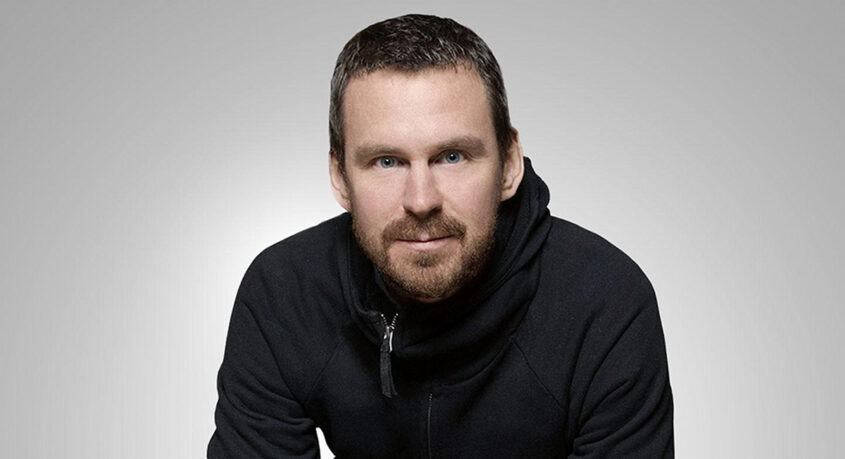


By Dustin Black, Executive Creative Director, Preston Spire. Dustin brings 25+ years of leadership and curiosity to an award-winning creative department. Nationally recognized for his infectious art direction, he seeks to craft brand voices that cut through today’s fractured media landscape. Dustin’s career spans top-tier agencies including BBDO, Colle+McVoy, mono, and Carmichael Lynch, earning multiple major awards along the way. Dustin has brought his entrepreneurial spirit — he wrote the acclaimed ‘The Book of SPAM’ and helped start an ice cream company — to national brands like Perdue, Craftsman, Franks RedHot Sauce, Cub Cadet, 3M, MSNBC, Subaru, Jackson Hole Tourism, Purina, Hormel, Caribou Coffee, Blue Bunny Ice Cream and Tillamook Cheese.
***
 Creative directors love to complain about the usual suspects – impossible deadlines, demanding clients, and the eternal struggle of getting good work through legal. But if I’m being honest, those aren’t the conversations happening in quiet moments between industry friends. The real anxieties run deeper, touching the very foundation of how we build careers and creative cultures in this business.
After more than 25 years in this industry and countless late-night conversations with fellow creatives, I’ve noticed three seismic shifts that are fundamentally reshaping what it means to lead creative teams. And frankly, they’re keeping more of us up at night than we’d like to admit.
The Death of Traditional Creative Carrots
Remember when the promise of advertising was week-long shoots at Shutters with deep per-diems? When a slightly larger-than-your-peer-group paycheck justified those brutal hours? Those days feel as distant as the three-martini lunch. Today, we’re asking talent to crank out exponentially more pieces with shrinking budgets, while salaries haven’t kept pace with inflation or the expansion of what “creative” now encompasses.
The brutal truth is that we’re competing for talent against tech companies offering stock options, unlimited PTO, and six-figure starting salaries for roles that don’t require working weekends. Meanwhile, we’re still selling “exposure” and “awards potential” – currencies that feel increasingly hollow when rent is due in San Francisco or Minneapolis.
This isn’t about becoming Google. It’s about recognizing that the old transactional relationship – long hours for industry prestige – no longer resonates with talent that has options. Smart creative leaders are shifting toward transformational partnerships instead. That means treating curiosity as currency, asking “How can we make you future-proof with AI?” and “What are your outside interests?” It means giving creatives real intellectual ownership in strategy development, not just execution.
The agencies that will win the talent war are offering micro-sabbaticals, quarterly creative retreats, and genuine skills diversification – cross-training in UX, data analysis, and even AI prompt engineering. They’re creating flexible career paths that don’t force everyone up the traditional ladder from ACD to CD to ECD. Because frankly, not everyone wants to manage people, and that’s perfectly fine.
The Junior Talent Paradox That’s Eating Our Future
Here’s the uncomfortable reality: many tasks we used to hand to junior writers, we now give to AI. Need a script cut down? ChatGPT. Need 100 headlines to find a couple gems? Claude. Need one award entry transformed into ten different formats? Any decent AI tool will handle it in minutes.
With the industry’s shift toward value-based pricing, it often makes more financial sense to have a senior team solve a brief quickly than spend hours coaching a project with junior talent. But this efficiency-first approach creates a devastating long-term problem – we need junior talent to become senior talent, but we can’t afford to train them the way we used to.
The result is a pipeline crisis that threatens the industry’s future. Senior talent burns out faster without junior support systems, and we lose decades of institutional knowledge when these senior leaders inevitably leave. Meanwhile, the few junior positions that remain have become hyper-competitive, creating a kind of Darwinism that may actually benefit the industry by filtering for only the most adaptable talent.
The solution isn’t to abandon junior talent development – it’s to completely reimagine what junior roles look like. Instead of traditional creative assistants, we need AI collaboration specialists who can expertly prompt and curate, not just create. We need cultural translators who can bridge brands and micro-communities, process innovators who can rebuild workflows with fresh eyes, and internal entrepreneurs who develop side projects that could become new agency capabilities.
The paradox is real, but it’s also an opportunity to create junior roles that AI genuinely can’t fill – roles that naturally develop creative thinking and client relationship skills while adding immediate value to the business.
The End of Precious Creative and the Rise of Systems Thinking
The days of building precious, gigantic omni-message campaigns are over. For context, precious creative is that obsession with one big, expensive, award-worthy idea that prioritizes agency accolades over genuine audience connection – the lazy approach of cramming a high-production TV spot into every channel instead of crafting work that feels native to where people actually consume it. Don’t get me wrong – we still need big ideas and world-class creativity. But those ideas need to flex into every corner of the modern media landscape, from six-second pre-rolls to influencer partnerships to real-time cultural response campaigns.
Today’s brands don’t want campaign moments – they want content engines. They need platform-native thinking where ideas are born for TikTok and can scale to out-of-home, not TV concepts awkwardly forced into social formats. They need always-on creativity that captures attention in seconds rather than building 30-second narratives. Most importantly, they need cultural velocity – the ability to respond to trends in hours, not weeks.
This fundamental shift means creative directors can no longer be precious artists working in isolation. We’re becoming orchestra conductors, building creative frameworks that can generate infinite variations while maintaining brand integrity. We’re embracing “good enough to ship” and iterating in public, because the biggest risk isn’t imperfection – it’s being ignorable.
The role now demands systems thinking over individual campaigns, cultural fluency over demographic targeting, and cross-functional collaboration over creative department hierarchies. Every creative decision needs to be informed by real-time performance data, not just gut instinct or focus group feedback.
Leading Through Transformation
These three challenges point to a deeper truth about our industry: we’re not just managing creative departments anymore – we’re leading organizations through a fundamental transformation. The skills, incentives, and outputs that defined creative success for decades are evolving at breakneck speed.
The creative director’s job description now includes cultural anthropologist, change management consultant, technology translator, talent alchemist, and business strategist. We’re helping teams understand micro-communities while bridging AI and human creativity. We’re transforming individuals into high-performing collaborative units while connecting creativity to measurable business outcomes.
The agencies that will thrive aren’t the ones trying to preserve the old mode – they’re the ones seeing these challenges as opportunities to redefine what creative excellence looks like in the modern world. Because while the tools and tactics are evolving, the fundamental need for genuine human insight, authentic emotional connection, and breakthrough thinking remains as relevant as ever.
The question isn’t whether we can adapt to these changes – it’s whether we can lead the transformation while staying true to what makes great creative work truly great.