



This summer, Cooper Hewitt, Smithsonian Design Museum will unveil its permanent collection galleries with a landmark presentation, “Design Across Time: Exploring the Smithsonian’s Design Collection.” Opening Friday, June 26, and on view for an extended, two-year display, “Design Across Time” will showcase a selection drawn from the national design collection of Cooper Hewitt, the New York City-based Smithsonian museum entirely devoted to design. Installed throughout the first floor of the museum’s Carnegie Mansion, the exhibition provides visitors with a new thematic take on one of the most diverse and comprehensive design collections in the world.
“Cooper Hewitt holds the nation’s design collection, a public resource that belongs to all and that, as is common across museums worldwide, is largely kept in storage,” said Maria Nicanor, director of the museum. “Expanding access for all to this rich repository of ideas – at a time when creativity and design can help us navigate uncertainty and complexity – is urgent and inspired the idea to bring this selection into view for an extended period.”
The multi-year installation of the permanent collection, which will feature rotations of objects throughout its duration, brings together more than 125 works across multiple design disciplines including product and graphic design fashion, textiles, digital design, wallcoverings, and architecture. “Design Across Time” will include significant works newly brought out of storage, recent acquisitions on public display for the first time and canonical objects of American and global design history.
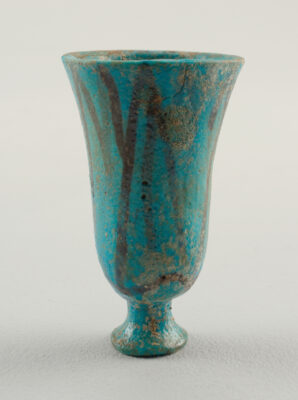
The installation is designed by JA Projects with graphic design by Pacific. From an introductory concentration of objects anchored in the central gallery, the exhibition extends through two dramatic axis vitrines that cut across the sequence of first-floor galleries. Combining a rich palette of textures from traditional and contemporary materials and leaning heavily on a graphic system of timeless collection object silhouettes, the display escapes traditional chronological readings. Instead, the presentation provides thematic groupings of a global collection that spans geographies, materials and time periods, ranging from an ancient Egyptian lotus-shaped cup to the recently acquired Toots Zynsky vessel, Aurifero II (2023).
The exhibition is rooted in the idea that design is everywhere, that it serves a civic purpose and that from objects to larger systems, everyone is an expert user and active participant of the built environment.